As of 2026, there is no single national licence you must hold to offer laser hair removal in England — but that is changing. The Government’s consultation response of 7 August 2025 proposed a new licensing scheme for non-surgical cosmetic procedures, expected to roll out around 2026–27. Today, your obligations come mainly from local council registration, which varies. This applies to England; the devolved nations differ.
It’s the question we hear most from salon owners right now, and there’s a lot of half-remembered pub-chat about it. So let’s separate what’s actually in force today from what’s coming — with dates, so you can plan rather than panic.
Please read this first. Contour Group provides general information, not legal advice. The rules in this area are changing, and the detail below is dated so you can check it’s still current. Always verify your own position against current GOV.UK guidance and your local council before you act.
So do I legally need a licence right now?

Right now, in England, there is no single nationwide “laser licence” that every practitioner must hold. Laser and IPL hair removal is not currently regulated by the Care Quality Commission (CQC) for cosmetic use (Checked against GOV.UK and House of Commons Library briefing CBP-10331 on 2 September 2026: the framework was confirmed in the government’s consultation response of 7 August 2025; the promised further consultation and final regulations were still awaited, and no licensing scheme was yet in force.).
What you do need to think about today falls into two buckets:
- Local council requirements. Many local authorities require salons offering laser/IPL treatments to register or hold a “special treatments” licence under local byelaws. This varies significantly from one council to the next — some require it, some don’t.
- Insurance and good practice. Your insurer will almost always require evidence of appropriate training and qualifications before they’ll cover laser hair removal. In practice, that means the qualification question below matters as much as the licence question.
So the honest answer is: today, it depends where you are — but that patchwork is exactly what the new scheme is designed to replace.
What’s changing — the new England licensing scheme

This is the part worth understanding, because it reshapes the whole picture.
On 7 August 2025, the Government published its response to the consultation on licensing non-surgical cosmetic procedures in England. It proposed a new licensing scheme built around a red/amber/green (RAG) risk framework, administered largely by local authorities (GOV.UK consultation response, 7 August 2025; House of Commons Library briefing CBP-10331).
The headline points for a salon owner:
- The scheme would introduce a licence requirement for practitioners and premises offering in-scope treatments.
- Treatments would be sorted into green, amber and red tiers by risk, with different requirements at each level.
- A further consultation on the higher-risk (red) procedures is expected in spring 2026, with rollout anticipated around 2026–27
(Checked against GOV.UK and House of Commons Library briefing CBP-10331 on 2 September 2026: the framework was confirmed in the government’s consultation response of 7 August 2025; the promised further consultation and final regulations were still awaited, and no licensing scheme was yet in force.).
In other words: the “do I need a licence?” answer is moving from “probably not nationally, check your council” towards “yes, under a national scheme” — and the smart move is to get ready now rather than scramble later.
Where does laser hair removal sit in the new tiers?
This is the question everyone wants pinned down, so let’s be precise about what’s known and what isn’t.
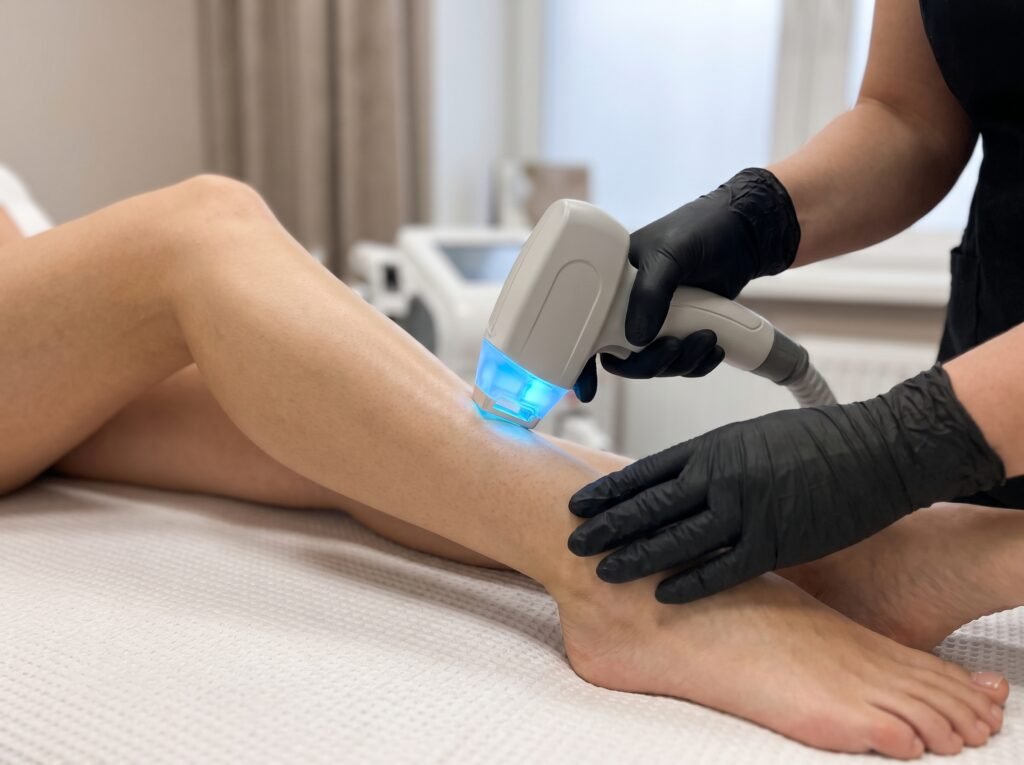
The proposed framework indicated that lower-risk treatments — for example non-ablative laser hair removal, IPL, LED and microneedling — would sit in or near the green tier, deliverable by a licensed practitioner meeting the required standards. Higher-risk laser work and ablative procedures were proposed for the amber and red tiers, with tighter oversight (Checked 2 September 2026: the August 2025 government response confirmed the green/amber/red framework, but individual treatments had not yet been formally assigned to tiers — placements described here are proposed, not final.).
We’re deliberately not stating the final tier placement as settled fact, because the detail is still being worked through in consultation. What we can say with confidence is the strategic point: the treatments most salons want to add — laser hair removal, IPL, skin and body lines — are the ones expected to be the most accessible under the new regime, provided you can show proper qualification and competence.
For a fuller walk-through of the tiers, see our guide to how UK laser treatment licensing works.
Do I need a qualification as well as a licence?
Yes — and this is arguably the more important point.
Under the direction of travel in the 2025 consultation response, qualification and demonstrable competence become central to being allowed to operate. A licence isn’t a substitute for training; it’s built on top of it. Insurers already take the same view.
For laser and skin treatments, the recognised route in the UK is a VTCT Level 3 and Level 4 qualification in laser and IPL treatments — a genuine accredited qualification, not a certificate of attendance for a day’s demo. If you can evidence that, you’re in a far stronger position whatever the final licensing detail looks like.
This is exactly why we bundle free, accredited VTCT training (delivered by SKIN13) with every laser machine — so getting qualified isn’t a separate cost or a separate headache. You can read what’s covered on our training and qualifications page and the detail of the VTCT training route.
What should I do now to be ready?

A calm, practical checklist beats worrying about headlines:
- Check your local council’s current requirements for laser/IPL treatments — registration or a special-treatments licence, if any.
- Get properly qualified (VTCT training for laser and skin) — this underpins both insurance and future licensing.
- Keep your paperwork in order — training certificates, insurance, protocols, consent forms and maintenance records.
- Follow the GOV.UK updates as the scheme is finalised through 2026–27, so you’re ahead of the changes, not behind them.
None of this is a reason to delay adding a laser line. If anything, it’s a reason to do it properly, with a supplier who builds the qualification and compliance support in — so you’re ready as the rules land.
The bottom line
Today, there’s no single national laser licence in England — but a new scheme is coming, and qualification is the foundation of it. If you’re adding laser hair removal, get qualified, keep good records, and check your council’s position. Do that, and the incoming rules become a non-event for your business.
If you’d like to talk it through with people who’ve run salons themselves and are watching this regime closely, take a look at our laser hair removal machines and the support that comes with them — training and qualification included, so you’re set up to operate compliantly from day one.
—
Written by Janice Hilton, founder and managing director of Contour Group and a former salon owner. Janice works with salon owners every week on adding laser and skin treatment lines the right way — qualified, financed and compliant.