A machine pays for itself through hours used, not through the price on the treatment list. The three things that decide those hours are whether the room is available when clients actually want it, whether you have enough trained people to open it, and whether the treatment mix keeps it busy through the quiet parts of the week. Most underused machines are a scheduling problem, not a demand problem.
This post is deliberately not about payback maths — we have covered the return on investment side separately, and there is no point repeating it. This is about the operational week: the rota, the room, the diary and the gaps.
Because in practice, the difference between a machine that earns its keep and one that sits under a sheet is almost never the machine.
Count the hours you can actually sell

Start with an honest number. Not the hours you are open — the hours the device room is genuinely available with a trained therapist in it.
Take a normal week and write down:
- The hours the room is open at all.
- Minus the hours no trained therapist is in the building.
- Minus the hours the room is being used for something else.
- Minus turnaround, setup and cleaning time between treatments.
What is left is your sellable capacity. Then compare it to the hours actually booked. Most salons doing this for the first time find that the sellable number is far smaller than they assumed, and the gap between sellable and booked is in a predictable place.
Do it monthly. It takes twenty minutes and it is the single most useful number in the business.
The three constraints, in order

When a device room is underused, it is nearly always one of three things — and they are worth diagnosing in this order, because fixing the wrong one wastes money.
1. Staff cover. If only one person is trained, the room closes when she is on holiday, off sick, on a day off, or busy with something else. This is the most common constraint by a distance, and it is invisible because it looks like normal staffing.
2. Room availability. The device shares a room with something else, or the room is only set up on certain days, or the machine has to be moved. Every bit of friction reduces the hours anyone will book into it.
3. Demand. Genuine shortage of clients wanting the treatment. Real, but much rarer than the first two — and worth checking honestly, because the fix is completely different.
If you have not solved one and two, do not spend money on marketing to solve three. You will generate enquiries for hours you cannot service.
Train more than one person
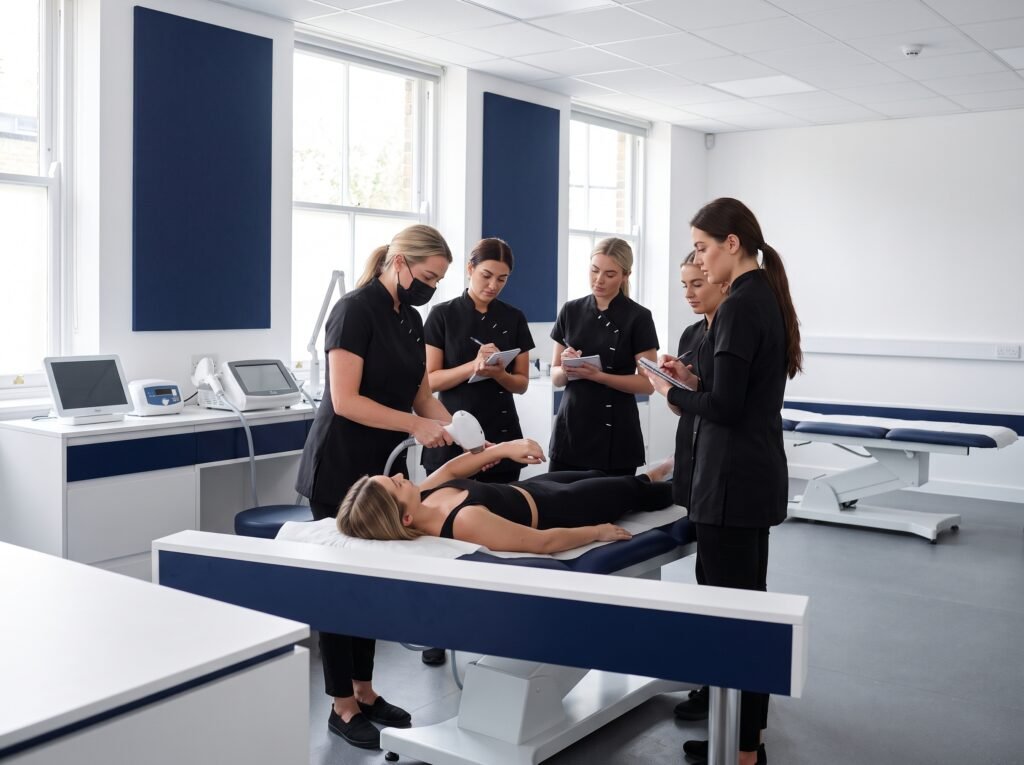
I would put this above everything else on the list.
A single trained therapist means the room’s capacity is capped by one person’s contracted hours, and it goes to zero every time she is away. Two trained therapists roughly doubles the openable hours and removes the single point of failure. It also means someone can be on the device while the other runs a consultation.
There is a retention argument too — a therapist who is the only one who can operate the machine is carrying a lot, and that wears.
The training that comes with our machines covers more than one person in many cases, and where it does not, adding a second trained operator is usually the cheapest capacity you will ever buy.
Fix the room before you fix the marketing

A few practical things that quietly cost hours:
- A machine that has to be wheeled between rooms. Every move is friction and a reason not to book.
- A room set up for the device only on certain days. If it is only “the laser room” on Tuesdays, you have a Tuesday business.
- Turnaround time you have not accounted for. If the appointment is booked back-to-back with no cleaning time, either the room runs late or the therapist eats the gap.
- Consumables kept somewhere else. Small, repeated, cumulative.
- A booking system that does not know the room and the therapist are both required. Double bookings and blocked slots follow.
Fix the physical set-up and the diary usually improves without any marketing at all.
Where the quiet hours are, and what fills them
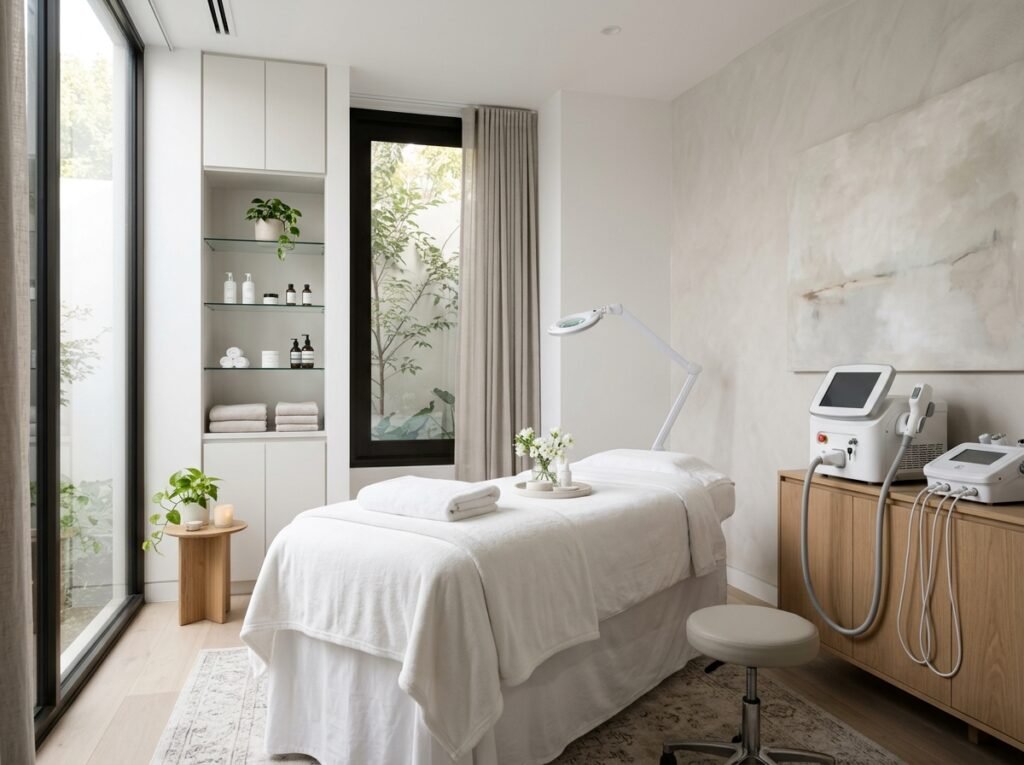
Every salon has them. Typically weekday mornings, early afternoons and the start of the week. Those are the hours your machine is sitting idle while the overheads run.
Options that work, roughly in order of how well they usually do:
| Approach | Best for | Note |
|---|---|---|
| Offer course clients the quiet slots first | Course-based treatments | They are coming repeatedly anyway — steer the whole series into quiet time |
| A shorter add-on treatment | Filling half-hours | Only if it does not disrupt the room set-up |
| Off-peak availability for members | Salons with a membership | Value the client feels, cost you barely notice |
| A midweek clinic day | Building a new line | Concentrates demand rather than spreading it thin |
| Corporate or shift-worker hours | Local employers nearby | Slow to build, sticky when it lands |
Steering course clients into the quiet hours is the strongest of these and the most underused. When someone books a full course, offer the quiet slots first and warmly. Most people are flexible at the point of booking the series and completely inflexible afterwards.
I would be careful with off-peak discounting as a first move. It trains your clients to wait for cheaper times, and it reduces the value of the hours you were already filling. Non-price incentives — priority, a longer appointment, a small inclusion — usually do the job without the damage.
Treatment mix, not one treatment
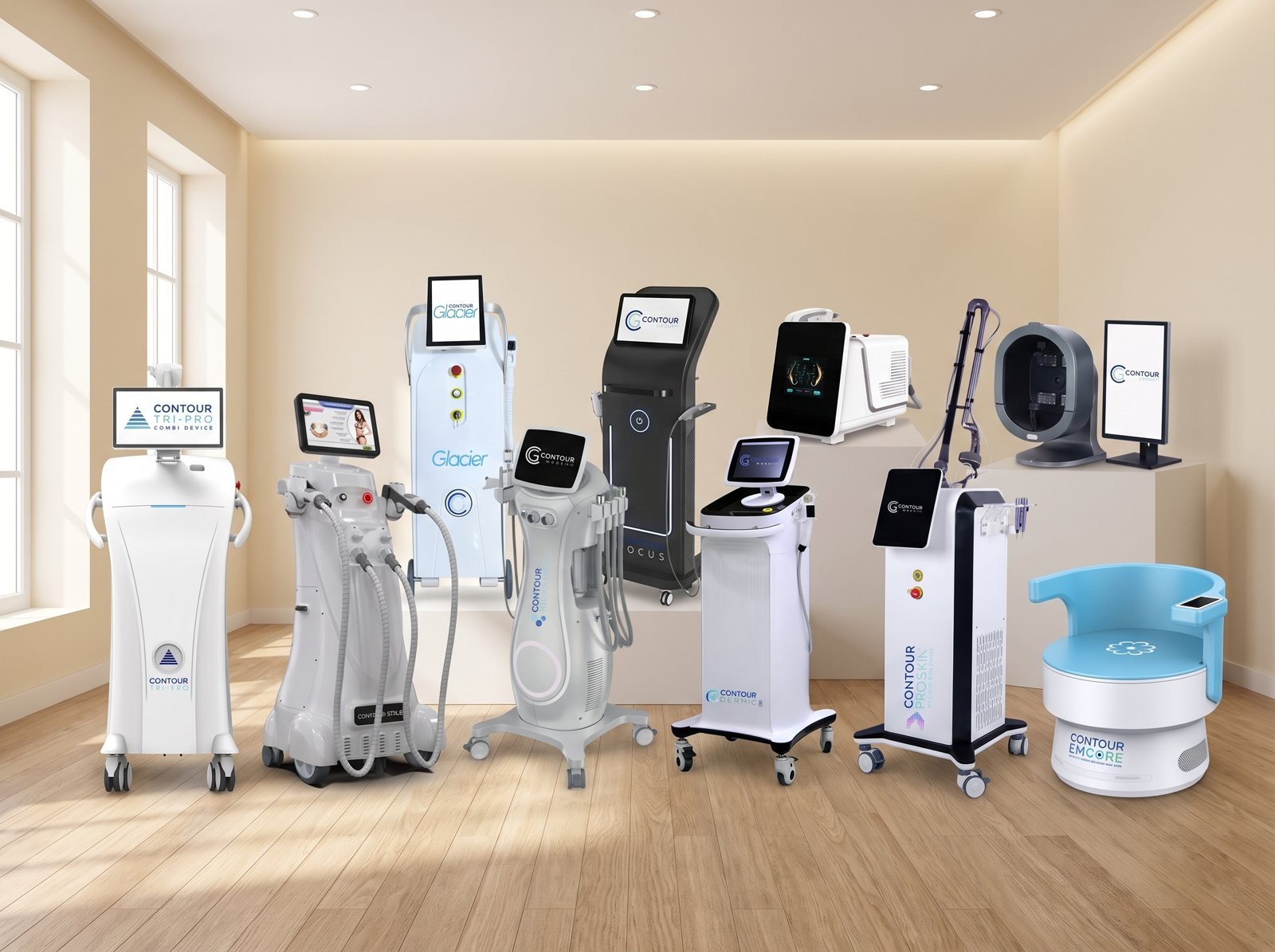
A room that does one thing has one demand curve. A room that does two or three complementary things smooths out.
The sensible version of this is not buying more machines. It is making full use of what a device already does — the additional applications, the different areas, the treatments that share the same room set-up and the same consumables. Most owners use a fraction of what their machine is capable of, usually because the training on the extra applications never quite happened.
Before you look at another purchase, go back through what you already own and ask which applications you are not offering, and why. Sometimes the answer is a good one. Often it is just that nobody got round to it.
Look at the data monthly

Four numbers, twenty minutes, once a month:
- Sellable hours on the device.
- Hours actually booked, as a proportion of those.
- Where the gaps sit — which days, which times.
- Why the gaps happened — no cover, no demand, cancellation, room unavailable.
That fourth column is the one that tells you what to do next, and it is the one everybody skips.
The short version
- Utilisation is decided by staff cover, room availability and treatment mix — usually in that order.
- Work out your genuinely sellable device hours, then compare with what is booked. Do it monthly.
- Train a second operator before you spend anything on marketing. It is the cheapest capacity available.
- Steer course clients into the quiet hours at the point of booking, and prefer non-price incentives to discounting.
- Use more of what your existing machine already does before considering another one.
If you want to work out realistically how many hours a week a treatment line would need to make sense in your salon, that is a conversation we are happy to have before anyone talks about a purchase — see the machine pages or the finance page for how customers usually structure it. Finance is subject to status.
—
Written by Janice Hilton, founder and managing director of Contour Group and a former salon owner. Janice has seen a lot of good machines under a lot of dust sheets, and it was almost never the machine’s fault.