
For salon owners: this is a client-education resource you’re welcome to share with your own customers — on your website, in a treatment-comparison email or at a consultation. It’s written for the person considering treatment, not for the trade, and it makes no promises — just a clear, side-by-side explainer you can hand over.
In short: fat freezing (cryolipolysis) uses controlled cooling, while cavitation uses ultrasound energy. Both are non-invasive cosmetic body treatments, and neither is a weight-loss method or a substitute for a healthy lifestyle. They work in different ways, suit different people and situations, and results vary. The right choice for you is a conversation to have with a qualified practitioner.
If you’ve been comparing body treatments, “fat freezing vs cavitation” is one of the most common head-scratchers — the names sound dramatic and the marketing can be confusing. Here’s a calm, honest comparison so you can go into a consultation knowing the right questions to ask.
First, an honest starting point

Both of these are non-invasive cosmetic treatments often talked about as body-contouring options — that is, they’re about the appearance of specific areas, not about losing weight. Neither is a diet, a medical treatment, or a shortcut around healthy eating and exercise. Any provider suggesting otherwise is overselling.
With that framing in mind, here’s how each one works.
What is fat freezing (cryolipolysis)?

Fat freezing, known technically as cryolipolysis, is a non-invasive treatment that uses controlled cooling applied to a specific area of the body. It’s usually delivered via an applicator placed on the target area during a session.
Common client questions:
- What does it feel like? People often describe an initial intense cold and a pulling or suction sensation that tends to ease as the area becomes numb from the cold. Experiences vary.
- Is there downtime? It’s typically presented as a treatment with little downtime, though some temporary redness, firmness or tenderness in the treated area is commonly described afterwards.
- How soon are changes seen? Any change is generally described as gradual, over a period of weeks — and results vary between people.
What is cavitation?
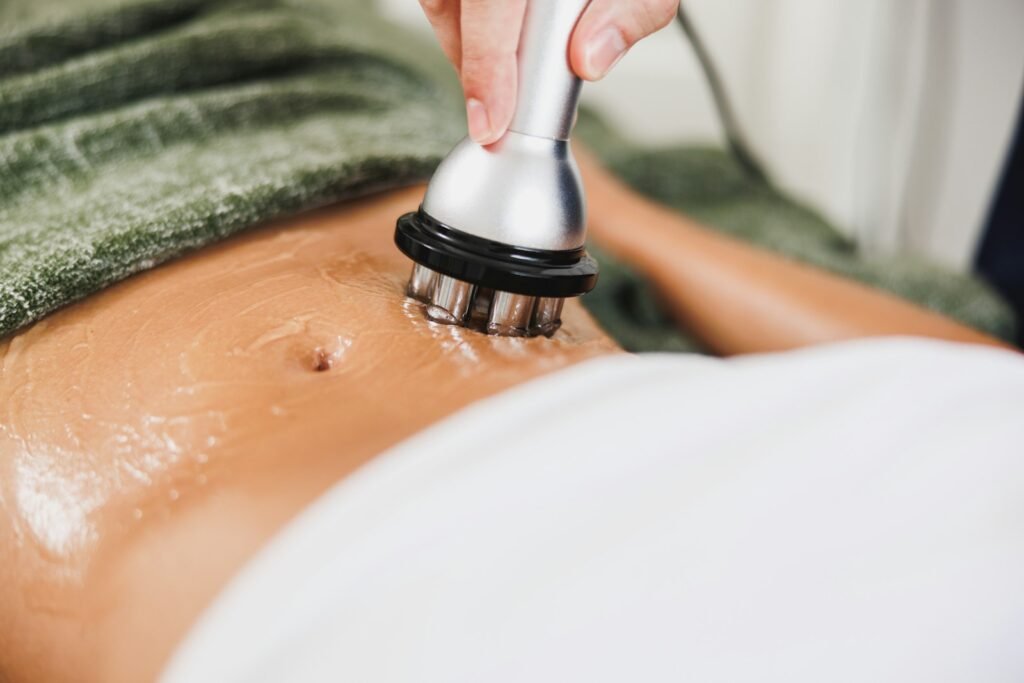
Cavitation (sometimes called ultrasonic cavitation or “ultrasound cavitation”) is a non-invasive treatment that uses ultrasound energy directed at a specific area. It’s usually delivered with a handpiece moved over the treatment area.
Common client questions:
- What does it feel like? People often describe warmth and sometimes a buzzing sensation or a high-pitched sound during treatment. Experiences vary.
- Is there downtime? Also typically presented as low-downtime; your practitioner will advise on aftercare.
- How many sessions? Cavitation is commonly offered as a course of sessions rather than a one-off, and providers often pair it with lifestyle advice.
Fat freezing vs cavitation: at a glance

This table is a simple orientation, not a recommendation — the right choice depends on you and your practitioner’s assessment.
| Fat freezing (cryolipolysis) | Cavitation | |
|---|---|---|
| Core method | Controlled cooling | Ultrasound energy |
| How it’s applied | Applicator on the area | Handpiece moved over the area |
| Invasiveness | Non-invasive | Non-invasive |
| Commonly described sensation | Intense cold, pulling/suction | Warmth, buzzing, a high-pitched sound |
| Typical format | Often per-area sessions | Often a course of sessions |
| *What it is not*** | Not weight loss; not medical | Not weight loss; not medical |
| Results | Vary from person to person | Vary from person to person |
every row against a dated, non-promotional source before publish. This is a general orientation only.
Which one is right for me?
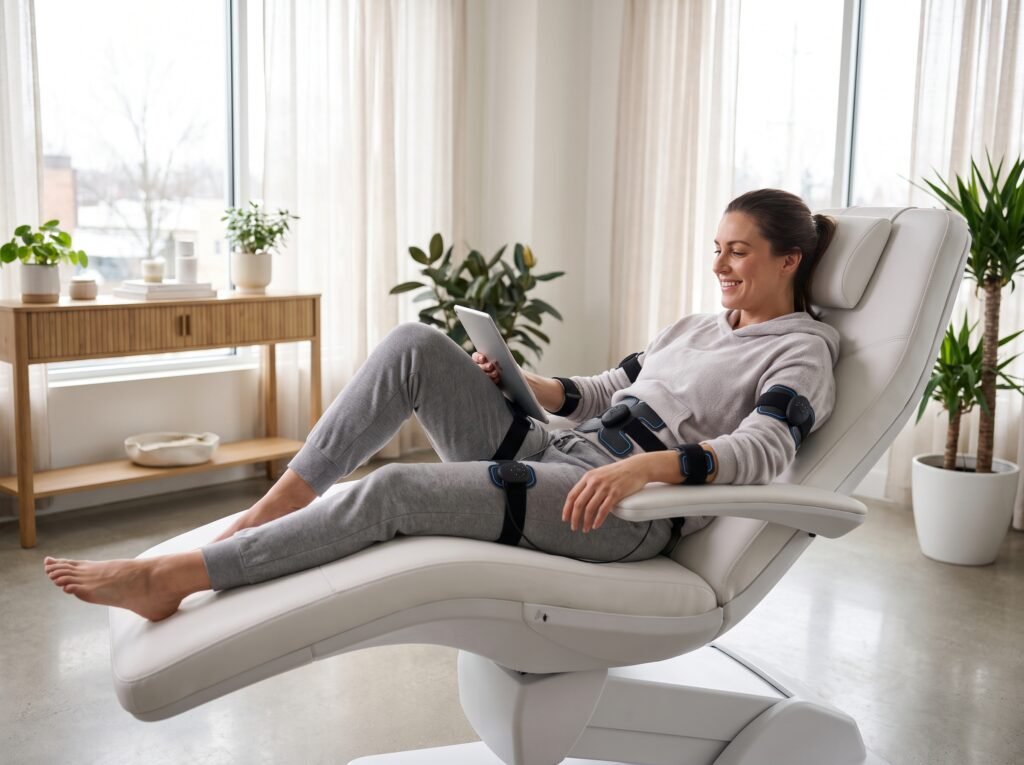
Honestly? That’s the wrong question to answer from a web page — and any guide that tells you “X is always better” is overstepping. The right treatment depends on the area you’re interested in, your skin and body, your expectations and your practitioner’s professional assessment at a consultation.
What we can say is what a good consultation looks like. Your practitioner should:
- Ask about your goals and explain what each treatment can and can’t do.
- Set realistic expectations and make clear that results vary.
- Be upfront that these are cosmetic treatments, not weight-loss or medical procedures.
- Take your medical history and tell you honestly if a treatment isn’t suitable for you.
- Never pressure you into booking a course on the spot.
A quick word on expectations

Body-contouring treatments are frequently over-marketed, so it’s worth repeating: results vary, changes are usually gradual, and neither treatment is a weight-loss method or a replacement for a healthy lifestyle. Approaching them with realistic expectations — and a practitioner who’s honest with you — is the surest route to being happy with your decision. If you’re pregnant, have a medical condition, or are unsure, mention it, and your practitioner may suggest speaking to your GP.
Questions worth asking your salon

- Which treatment do you think suits my goals, and why?
- What results are realistic, and over what timescale?
- How many sessions might I need, and what’s the aftercare?
- What training and qualifications does the practitioner hold?
- Is this treatment suitable for me and my medical history?
The honest bottom line

Fat freezing and cavitation are both non-invasive cosmetic body treatments that work in different ways — cooling versus ultrasound — and neither is a weight-loss solution. There’s no universal “better” option; there’s only what’s right for you, which is exactly what a consultation with a qualified practitioner is for. Go in informed, ask the questions above, and expect realistic answers rather than big promises.
—
Written by Janice Hilton, founder and managing director of Contour Group and a former salon owner. Contour Group supplies professional body and skin machines to UK salons and clinics, together with the training behind them. This article is general information for clients, not medical advice — always speak to a qualified practitioner, and your GP where appropriate, about your own treatment.