For a new laser salon, the strongest starting equipment is usually one proven, in-demand treatment line rather than a room full of machines. Laser hair removal is the most common first buy because demand is steady and salon-legal. Add complementary lines once the first is booked out and paying its way.
Kitting out a new salon is where a lot of money gets spent in the wrong order. The temptation is to buy broad — a bit of everything — so the menu looks impressive on day one. In practice, that’s how machines end up idle in the corner. This guide is the “where do I actually start?” answer, from people who’ve stood in a new salon working out the same thing.
What salon equipment should I buy first?
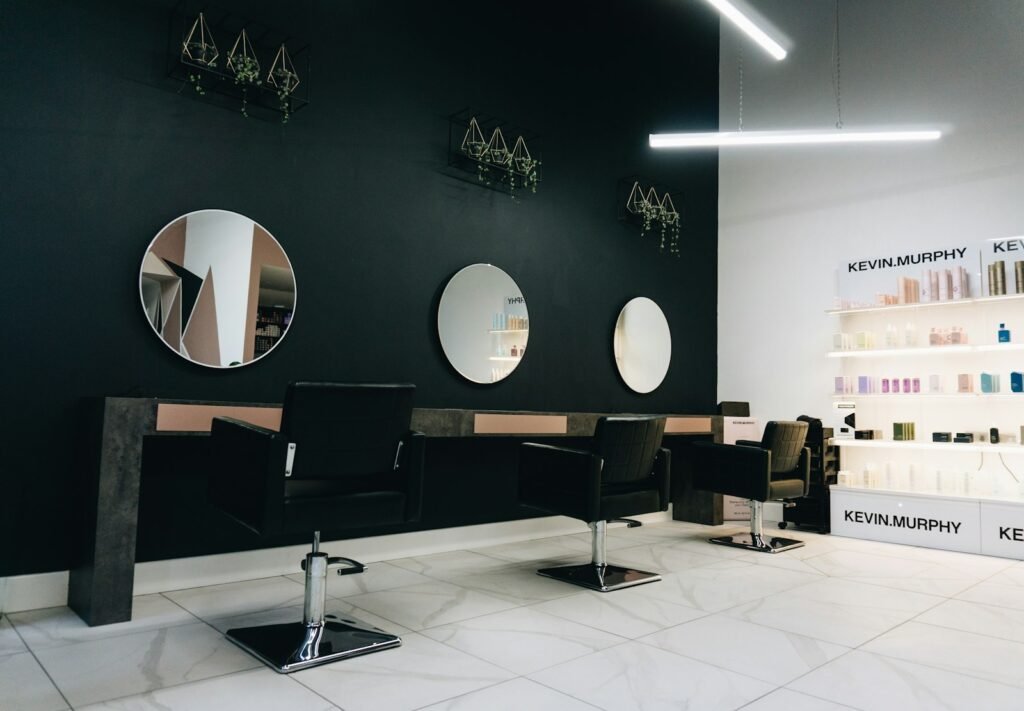
Start with one high-demand line, get it booked and profitable, then expand. Buying a single machine well beats buying three machines you can’t fill. When you’re choosing that first device, weigh:
- Demand in your area — what are clients already asking for, or travelling elsewhere to get?
- Salon-legal, green-tier treatments — lines you can realistically get qualified and licensed to offer under the incoming rules (more on that below).
- Your space and power — some machines need more room, ventilation or electrical supply than others.
- Your ability to sell it — a treatment you can confidently consult on and market beats a clever machine you can’t explain.
For most new laser salons, that first line is laser hair removal: it’s the largest salon-legal energy-based treatment category and clients understand it. But “most” isn’t “all” — your local demand comes first.
Which machines make a sensible starter menu?
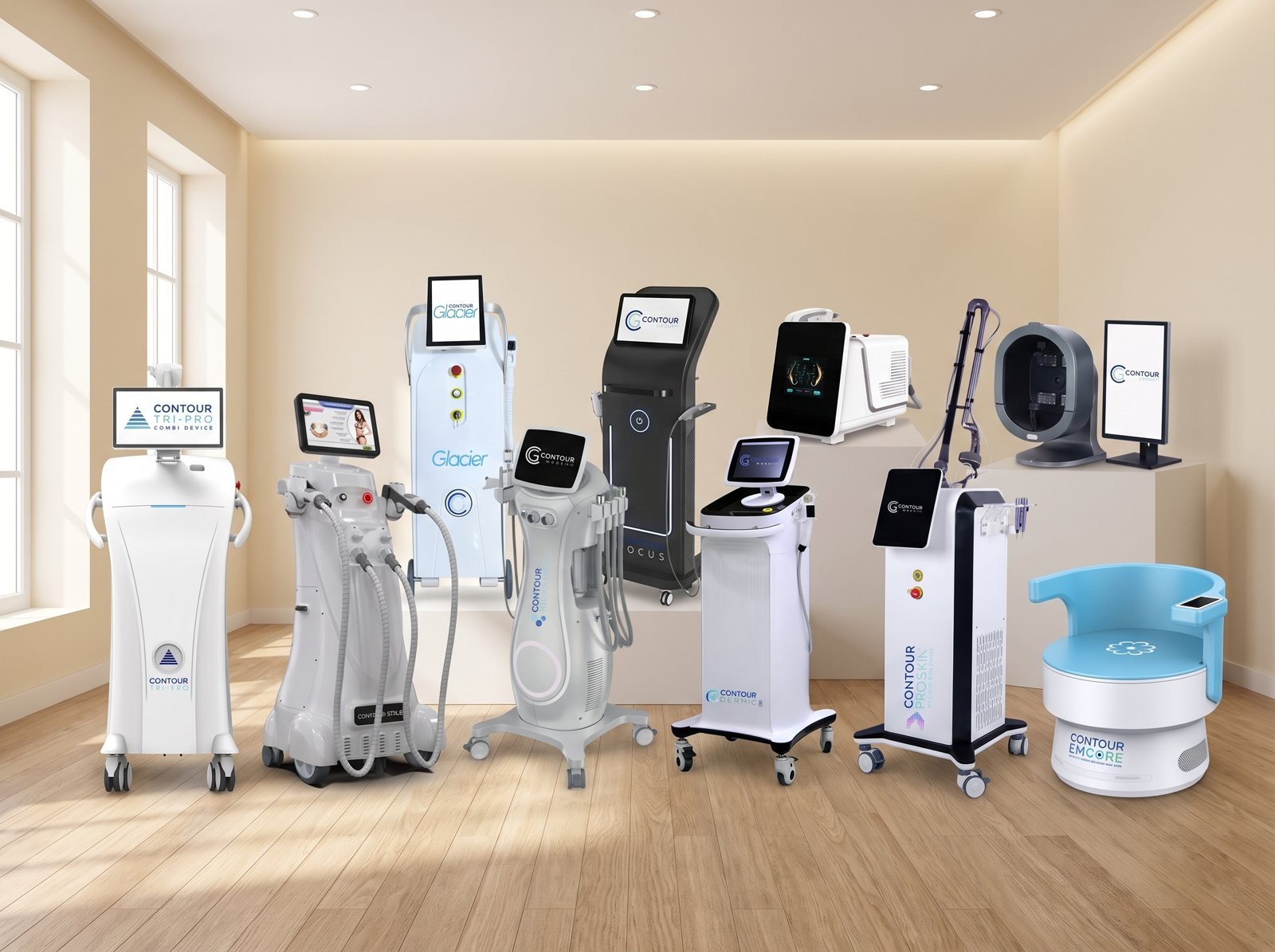
Rather than a shopping list, think in tiers — buy tier one, prove it, then earn your way into tier two. Here’s a realistic sequence for a new salon:
| Stage | Typical line | Why here | Contour line |
|---|---|---|---|
| First machine | Laser hair removal | Steady, understood demand; salon-legal | Glacier / Dio-Ice laser |
| Add next | Skin — microneedling & RF, or HydraFacial-style facials | Broadens the skin menu; repeat visits | Derma II RF & Microneedling · HydroFacial |
| Broaden | Body & fat — cavitation, EMS or cryolipolysis | Adds a body line once footfall supports it | SculptEMS · cavitation · cryolipolysis |
| Support tool | AI skin analyser | Strengthens consultations across the menu | Contour Sense |
You don’t need all of this on opening day. A focused two- or three-line menu, done well, is a stronger start than a crowded one. Our guide to choosing an aesthetic machine goes deeper on matching devices to your client base, and you can browse the full range on the machines hub.
Do I need qualifications and a licence to open a laser salon?
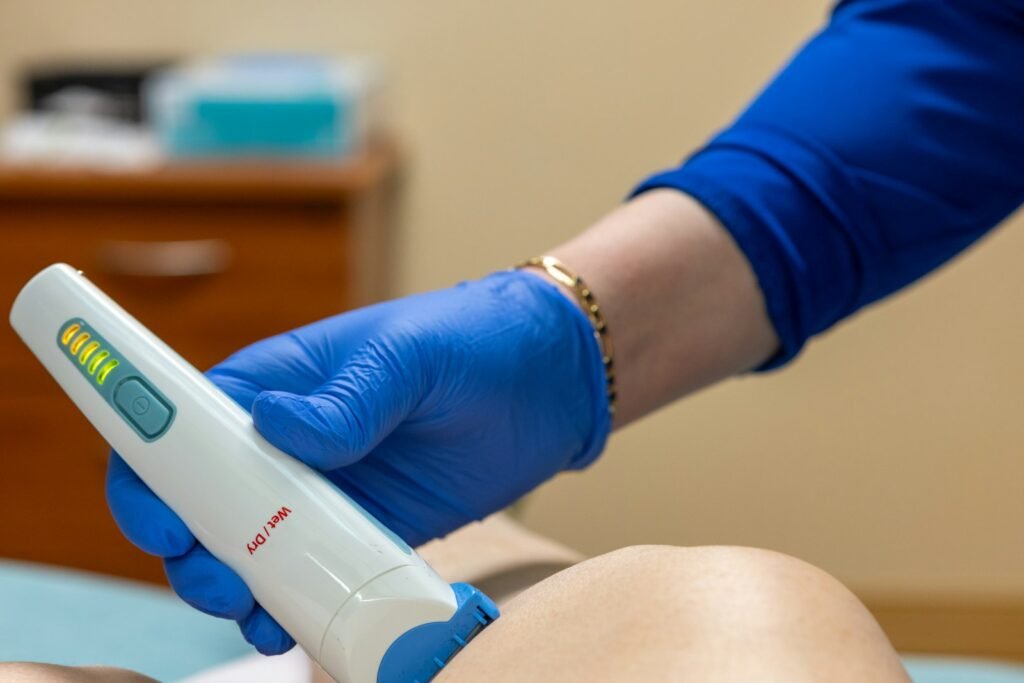
Yes — and this is worth settling before you spend anything on equipment. Laser and IPL treatments are regulated, and the rules in England are changing.
- Training. Recognised qualifications such as VTCT Level 3 and Level 4 laser and IPL are the practical route to operating competently and compliantly.
- Local registration. Many local authorities require premises offering laser/IPL to register, with requirements that differ by council.
(Checked against GOV.UK and House of Commons Library briefing CBP-10331 on 2 September 2026: the framework was confirmed in the government’s consultation response of 7 August 2025; the promised further consultation and final regulations were still awaited, and no licensing scheme was yet in force.) - The new England licensing scheme. A national licensing framework for non-surgical cosmetic procedures is being introduced (consultation response August 2025), with a phased rollout expected across 2026–27. This applies to England; the devolved nations differ.
(Checked against GOV.UK and House of Commons Library briefing CBP-10331 on 2 September 2026: the framework was confirmed in the government’s consultation response of 7 August 2025; the promised further consultation and final regulations were still awaited, and no licensing scheme was yet in force.)
Contour Group provides general information, not legal advice — verify against current GOV.UK guidance. Every Contour laser machine includes free accredited VTCT qualifications (via SKIN13), so getting qualified isn’t a separate cost or a separate scramble. Our laser treatment licensing guide covers the regime in plain English.
How do I fund the equipment without draining cashflow?

Buying outright on day one isn’t the only option, and for a lot of new salons it isn’t the sensible one. Finance lets you spread the cost so a machine can start earning before it’s fully paid off. Finance is subject to status and affordability.
Before you commit, it’s worth sketching the payback: what you’ll charge, how many sessions a week you can realistically book, and your running costs. We won’t invent those numbers here — — but our ROI and payback guide shows how to build the maths honestly.
What’s included when you buy from Contour?
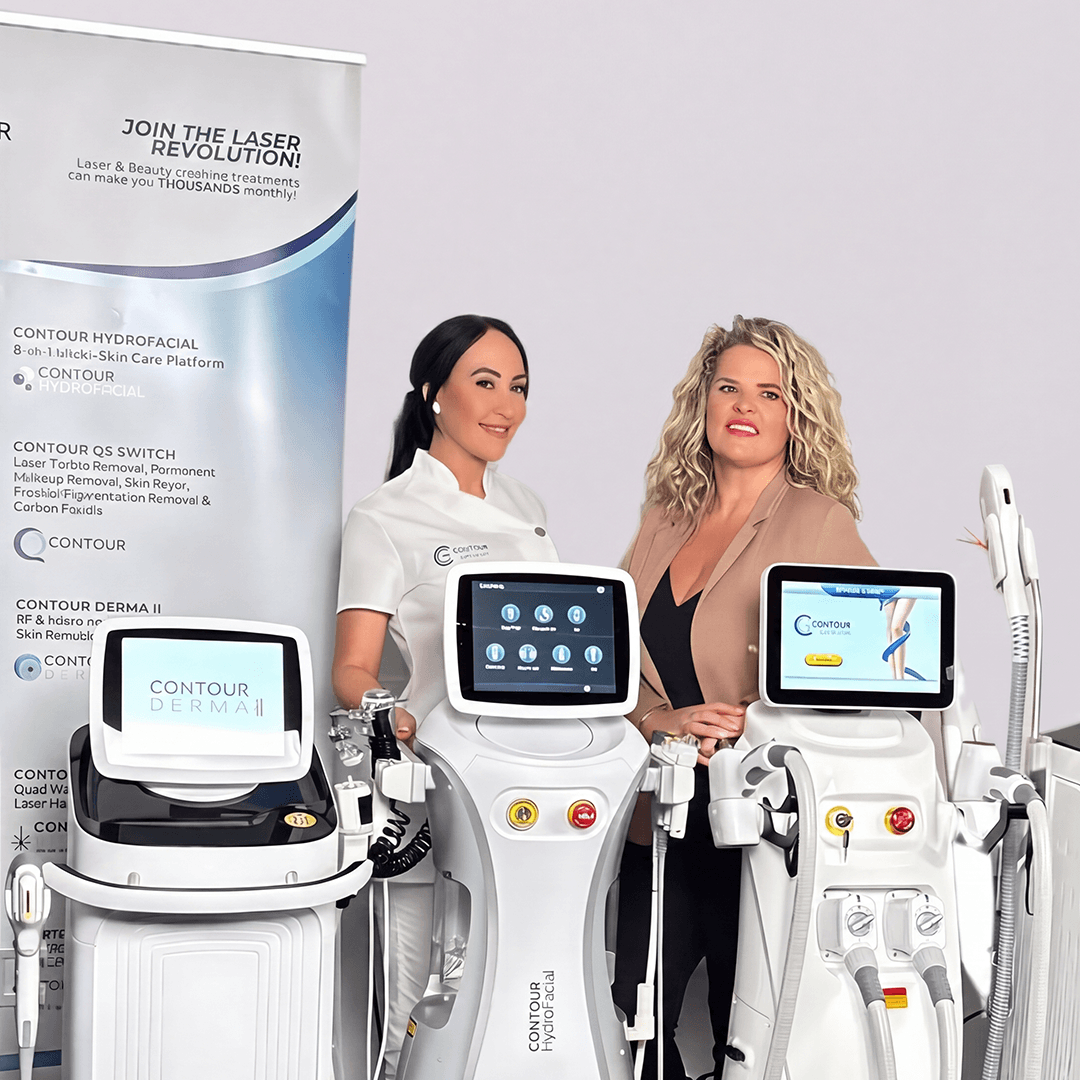
For a new salon especially, buying the machine is only half the job — you also need to be qualified, staffed and able to sell it. That’s the whole point of the package:
- The machine — the right device for your client base.
- Free accredited qualification — VTCT training, delivered by SKIN13.
- Free manufacturer training — for up to five members of staff.
- 1:1 business coaching — with Katie Godfrey (KG), for pricing and marketing your new line.
- FCA-regulated finance — spread the cost (subject to status).
- After-sale support — from a team that’s run salons themselves.
The honest next step

Opening a laser salon is a big, exciting step — and the fastest way to waste money is to buy broad instead of buying well. If you tell us about your space, your clients and your budget, we’ll help you pick a sensible first line rather than the longest invoice. Browse the full range of machines or book a demo when you’re ready.
—
Written by Janice Hilton, founder and managing director of Contour Group and a former salon owner who’s built a treatment menu from scratch.