There is no single “best” professional laser hair removal machine — the right one is the machine that matches your clients’ skin types, your realistic booking volume and your budget, and comes with the qualification, training and support to actually run it. Choose on fit and total package, not spec-sheet bragging rights. Results vary.
If you searched for the “best” machine, you probably want someone to just tell you which to buy. We won’t do that honestly without knowing your salon — but we can give you the questions that lead you to the right answer, from people who’ve run the chair themselves.
How do I choose a laser hair removal machine?
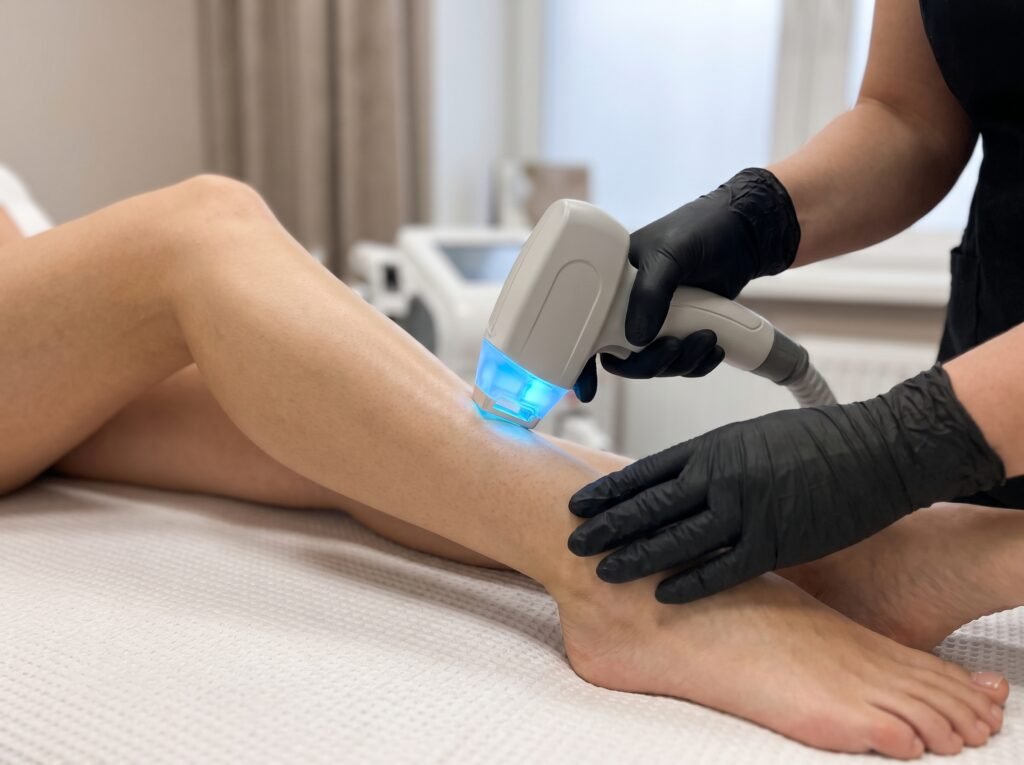
Work through these in order. The specs come last, not first.
- Who are your clients? Their skin tones and hair types decide which wavelengths and technology you need. A machine that’s wrong for your client base won’t get booked.
- How many can you realistically treat a week? Be honest. Utilisation — a full diary — is what makes a five-figure machine pay, so match throughput to demand, not to the brochure.
- Can you get qualified and licensed to use it? No point buying a system you can’t legally operate (see below).
- What’s the total cost of ownership? Machine, warranty, servicing, consumables, training and finance — not just the sticker price.
- What happens after the sale? Who trains your team, who answers the phone when something goes wrong, and who helps you fill the diary?
Diode or IPL — which technology is right?

For most salons the real fork is diode laser versus IPL. In short: a diode laser is purpose-built for hair removal and tends to suit a dedicated, high-throughput hair-removal line across a wider range of skin tones; IPL is a broad-spectrum device that can cover several skin services but is a generalist. Neither is universally superior — it’s about what you’re trying to build. We compare them properly in diode versus IPL: which to buy.
What specs actually matter (and which are noise)?

Once you know your clients and volume, these are the specs worth asking about:
- Wavelength(s) — the technology behind which skin tones and hair types you can safely treat. Ask which are covered and the evidence for it.
- Spot size and repetition rate — practical throughput. A bigger spot and faster rate mean quicker sessions and more clients per day.
- Cooling — client comfort during treatment, which affects rebooking.
- Warranty and servicing — downtime is lost revenue. Ask about response times and UK servicing.
- Consumable costs — the ongoing cost per treatment, which quietly shapes your margin.
Marketing terms like “the most powerful on the market” are not a spec — treat superiority claims with healthy scepticism and ask for the substantiation. We avoid them ourselves.
A note on overseas certifications: you may see “CE marked” or “FDA cleared” on a datasheet. Those are regulatory statuses, not proof a machine will get results, and FDA clearance is a US regulatory status, not a UK efficacy guarantee. Judge a machine on fit and support, not on a badge.
Do I need a qualification to run one?

Generally yes. To offer laser and IPL in the UK you’ll usually need a recognised qualification (commonly VTCT training in the laser/skin/IPL lane), and often a local council registration. England’s new licensing regime for non-surgical treatments is rolling out across 2026–27, and qualification and competence are central to it. (Checked against GOV.UK and House of Commons Library briefing CBP-10331 on 2 September 2026: the framework was confirmed in the government’s consultation response of 7 August 2025; the promised further consultation and final regulations were still awaited, and no licensing scheme was yet in force.) This applies to England; the devolved nations differ, and this is general information, not legal advice — check current GOV.UK guidance. In practice: buy from a supplier who gets you qualified as part of the deal.
What’s the smartest way to pay for it?
Plenty of owners spread the cost with finance so the machine can begin earning before it’s paid off. If you do, ask for the full representative example — APR, total payable and term — not just a monthly number. Finance is subject to status and affordability. There’s more in our ROI and payback guide.
Why the package matters more than the machine
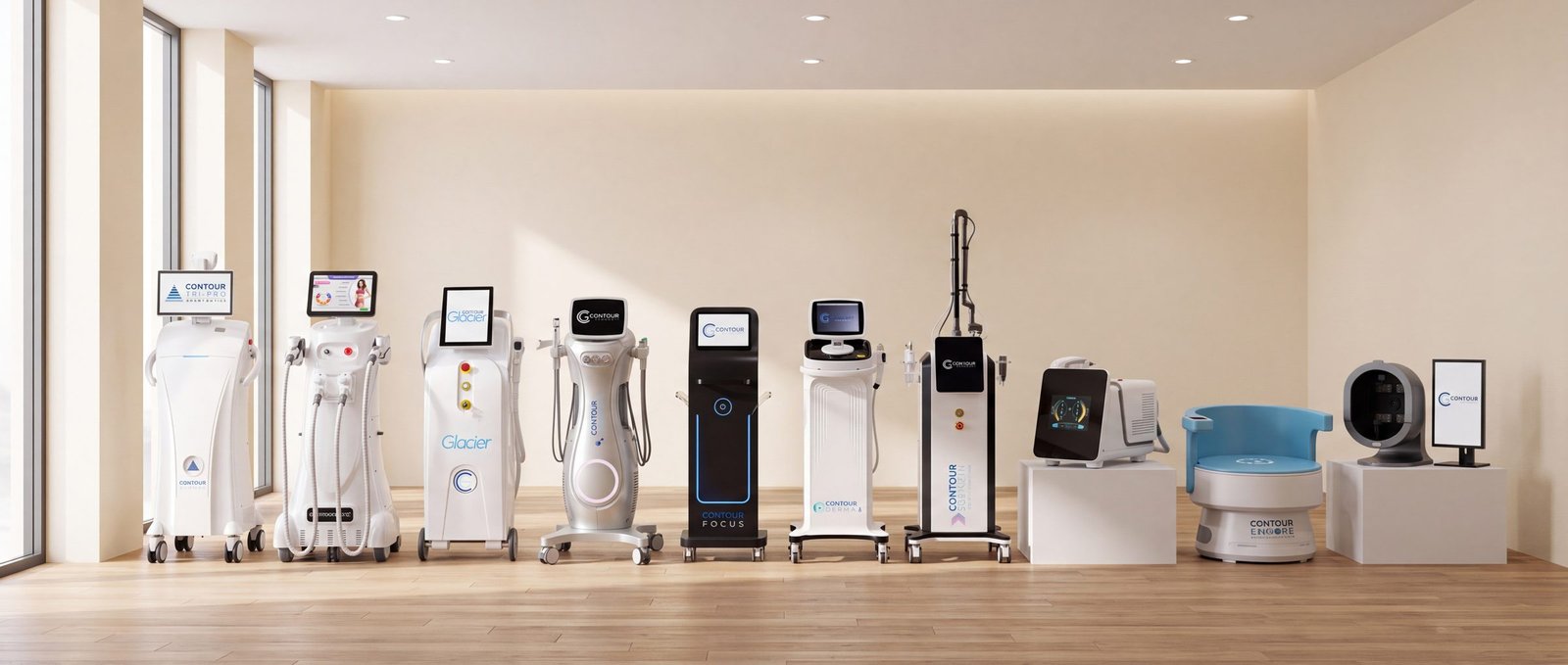
Two salons can buy the identical machine and get very different outcomes — because the difference is rarely the box. It’s whether the team is trained, whether the owner knows how to price and market the line, and whether there’s support when a client asks a tricky question. That’s why every Contour machine includes accredited VTCT qualifications (via SKIN13), manufacturer training for up to five staff, 1:1 coaching with Katie Godfrey (KG), FCA-regulated finance and after-sale support.
For what that looks like in a real salon, see our case studies.
The honest next step

The best machine is the one that’s right for your salon — and you’ll get to that answer faster in a conversation than off a spec sheet. Browse our laser hair removal machines for salons, or book a demo and we’ll help you choose the right first line. If none of ours fit, we’ll tell you.
Written by Janice Hilton, founder and managing director of Contour Group and a former salon owner.